
Prikaz objav z oznako Intervju. Pokaži vse objave
Prikaz objav z oznako Intervju. Pokaži vse objave
petek, 22. september 2023
petek, 10. februar 2023
BURT BACHARACH

8. februar je bil usoden še za enega mojstra.
Burt, ostal boš soundtrack mojega življenja.
Naj ti bo lahka zemlja.
torek, 9. oktober 2018
ALBUM BY ALBUM: DAVID AXELROD

ALBUM BY ALBUM:
David Axelrod was born in Los Angeles in December 1933. An orphan at the age of 14, he left high school before graduation in order to fend for himself. According to an April 1970 Capitol press release, over the next few years ‘Dave dug ditches, drove trucks, took up prize fighting, became a machinist, was a bus boy at the Coconut Grove – all the things that look glamorous listed on a book jacket but are grim to look back on.’ Though he was running with a wild and tough crowd and nursing a heroin habit by the end of his teens, he always sustained his love of music. “The first album I ever bought was an album in the original sense of the word – a heavy card wallet with pictures pasted on the front and back, and four 78s inside,” he remembers. “It was by Nat King Cole, who was my hero.”
Aged 19, his life took a decisive turn when he met the jazz pianist Gerald Wiggins. Over the next five years, Wiggins “taught me scales, how to read music in time with a metronome, and much else besides.” Determined to make a living out of music, Axelrod went on to pick up the basics of composition and harmony from the arranger and composer Mauro Bruno, but was largely self-taught. By the late 50s he had started to work in recording studios, and began meeting his heroes. “The biggest thrill I ever got was when I was introduced to Nat King Cole by Lee Gillette in a studio hallway sometime in the mid-50s. I thought I was going to faint. A few years later I went into the Brown Derby, where everyone in the industry met for lunch in those days, and saw Nat having a meeting. I didn’t want to disturb him, so I walked past his table without saying anything, only to hear him say: ‘Now you’re a producer at Capitol, you don’t say hello to old friends anymore?”’ He was joking, of course. What a great guy he was to know.”
After handling promo and sales at small labels such as Tampa, Motif and Specialty, his first production job came with a Gerald Wiggins session. This led to overseeing exotica recordings with Arthur Lyman, earning him his first gold disc. Then, in 1959, having borrowed some money, Axelrod took the bold step of recording an album by West Coast hard bop saxophonist Harold Land at his own expense. Hi Fi bought it from him for $1200, and issued it as The Fox to critical acclaim in March 1960. Thereafter Axelrod worked in-house at Plaza Records, producing cash- in LPs – but small labels didn’t figure in his masterplan for long. “I always wanted to be a producer at Capitol, because it was the only major that was headquartered in Los Angeles rather than New York, and had most of the artists I liked,“ he says. He fulfilled his ambition by becoming a staff producer there in 1964, and immediately began to oversee a stream of successful records by Lou Rawls, David McCallum, Cannonball Adderley and others (as well as many obscurities, some of whom he can’t even recall), often in collaboration with the arranger H.B. Barnum. Asked about his own tastes in those days, he says “I always found time to listen to a lot of records, and of course in the 60s Capitol could get me whatever I wanted. Lalo Schiffrin was and is great, and John Barry was magnificent. He had that sound – the high register – that let you know it was him right away. But I tried hard not to allow myself to be influenced by contemporaries, only classical composers. I always liked Mahler and Ravel, and I adore Beethoven. He was magnificent. And Alban Berg, of course. As far as bands went, I loved the Beatles, of course, and always liked the Who. I wasn’t so keen on the Rolling Stones. I knew Brian Wilson in the 1960s, but I never worked with him. I never attended any Beach Boys sessions, because I find it so hard to keep my mouth shut when someone else is producing!” By 1967 he was itching to develop his own compositional talents, and therefore wrote and arranged Mass In F Minor, blending R&B, jazz and classical music to groundbreaking effect. It created a considerable stir, being described by Time magazine on December 29th 1967 as ‘one of the most venturesome of recent rock recordings, achieving a surprisingly successful blend of pounding rhythms, churchy organ, raucous improvisations and echoes of medieval plainsong’. Axelrod was in his element, and it was followed by Release Of An Oath (another adaptation of religious themes to a rock setting), two ambitious interpretations of works by William Blake, concept albums about ecology and the slave trade, an elliptical Hispanic set, a reworking of Handel’s Messiah, amongst much else. Axelrod discusses these in detail in the following pages. His output was phenomenal, but – as he has noted – “My wife and I weren’t getting along at all, so I’d rather be at Capitol at home. I was always recording.”
MASS IN F MINOR
(Reprise RLP 6275) 12/67
“This was the idea of my manager, a terrific guy named Lenny Poncher. I got home from a session at 4am one night in 1967, and was woken at 9:30 by my phone ringing. It was Lenny, saying “Can you write a rock mass?” I said “I can write anything!”, hung up and went back to sleep. But I called him back at 12, and before I knew it I was writing the album. The chance to write a Mass doesn’t come around very often! My only insistence was that it had to be sung in Latin. The problem was that I was under contract to Capitol, and the Electric Prunes (whom Lenny also managed) were signed to Reprise. Thankfully, the head of Capitol was an enlightened man named Alan Livingston, and he agreed to let the project go ahead as long as he could then put a record out under my name – and that’s how Song Of Innocence came about. Mass In F Minor was by the Prunes in name only. They weren’t really capable of playing that sort of music to the standard required. It has their bassist and drummer on it, but the players were mainly session guys. They tended to be older, and were very experienced. A lot of them had known me since I was starting out aged 19, and would call me ‘kid’ even when I was in my 50s! I always recorded the rhythm tracks first, then the orchestra, the brass, the reeds and so on. I believe that drums belong high in a mix – I’m not saying that’s the way everyone should do it, it’s just the way I do it. It was recorded in 3 days flat. There was no experimenting in the studio; everything was down, on the score. That’s the way I work. Dave Hassinger is credited as producer, but he was really an engineer, and a very good one. The album caused quite a stir, and by the end of the year it was being featured in Time magazine! By the way, the largest royalty check I ever got was when they used Kyrie Eleison in Easy Rider in 1969. I had no idea – I had a phone call from my publisher at Capitol, saying “You’re going to be in this picture. They’re not using a score, only records. I thought that was really great. The first time it had ever been done. But I haven’t received any royalties for that in years. All good things come to an end, trust me!”
SONG OF INNOCENCE
(Capitol ST 2982) 9/68
“By 1968 my work with David McCallum, Lou Rawls, Cannonball Adderley and others was bringing in 34% of Capitol’s gross. I could have done anything, so I jumped at the chance to interpret William Blake’s work in music. I’ve always felt a huge connection to Blake, both as a poet and a painter, and I’d been living with his work for many years by then. Blake was a trickster – his words often have meanings that aren’t immediately obvious, so I tried to insert similar unexpected twists and turns into my music. Capitol had a huge art library for their designers to drawn inspiration from, so I went down there and borrowed a two-volume set of Blake’s works, and had it next to me as I wrote. The pictures gave me ideas, and if you can’t get ideas from looking at Blake, you need to see a psychiatrist! I go into a trance when I’m writing, and it only took a week to complete. For the guitar parts I used Peter Wyant, from a band I produced called Hardwater. He was perfect because he wasn’t an experienced studio musician, so I knew he wouldn’t be too fancy. The guitar work needed to be simple, because I knew it would be a challenging enough work as it was. When the music was done, I got straight on with my next project, and didn’t think to ask Capitol to use a Blake image on the cover, so they came up with something themselves. The record got some great airplay, but unfortunately, Alan Livingston departed Capitol in the summer of 1968, and it got lost in the period of change that followed. In my view the company never recovered from his departure – he WAS Capitol Records. He believed in leaving producers alone, which is a great philosophy. Anyway, I recently read an article saying that Song Of Innocence changed music, by combining a rock rhythm section with an orchestra. That was pretty flattering. And you know what? I never returned the Blake books! I didn’t mean to keep them, I just forgot to give them back, and I still have them to this day. I guess they can afford a new set!”
RELEASE OF AN OATH
(Reprise RS 6316) 9/68
“This was another of Lenny Poncher’s ideas. He approached everything from a commercial viewpoint – that’s what made him such a great manager, the best I ever had. I wasn’t familiar with Jewish music at all, but I loved the experience. I had a free rein creatively – I always do, or else I wouldn’t do whatever it is in the first place. The album also came out under the Electric Prunes’ name, so people talk about the two Prunes albums as if they’re one entity – but in fact several months separated them, and the writing is completely different. I don’t know if it was ever performed live. If so, I wasn’t there. I wrote it, I produced it, it came out, I went on to the next one, and I didn’t look back. That’s the way it was in those days.”
SONGS OF EXPERIENCE
(Capitol SKAO 338) 10/69
“Even though Song Of Innocence got no marketing push, Capitol were happy for me to make a sequel, partly because Henry Stone (who owned the biggest one-stop in the whole South) told Stan Gortikov, who was President of Capitol by then, that I’m a genius, and should be making more albums. Next thing I know, the head of A&R tells me to make another album. I loved the music on Songs Of Experience, but I hated the cover – they had me wrapped in a giant toilet roll with some girl standing next to me. I thought it looked ridiculous, and it also sank without trace. At that time Capitol’s Vice-President of A&R was a guy named Voyle Gilmore. Those guys were like God back then. I got together with him for lunch in a restaurant sometime in 1971, by when he had left the company. He cheerfully told me that he’d deliberately killed the records that had appeared under my name, by ordering the head of promotion not to push them. Apparently I was more valuable to the label as a producer and arranger of other people’s work, and he didn’t want me getting carried away as an artist. I was furious. I asked him, “Why the hell didn’t you come to me and discuss it?” He just smiled and said “It was all a long time ago.” I thought, ‘Yeah, like, three years!’ And how wrong he was, anyway – my love was producing and arranging, and I never wanted a career only as a solo artist.”
EARTH ROT
(Capitol SKAO 456) 4/70
“Despite doing nothing with my previous records, towards the end of 1969 the sales department at Capitol asked me to write an album on an ecological theme. The environment was becoming a major preoccupation at the time, and they were building a marketing campaign around it. I was happy to oblige – I was passionate about the environment, and loved to go rock-climbing. I even climbed Yosemite around that time. My son Michael was about 19 and wanted to be a writer, so I thought I’d give him a shot, and we worked on it together. I found passages in the Book of Isaiah that I wanted to use, so he adapted those, as well as a Navajo prayer. I wanted to tell a story with that album. For the music I used lots of major and minor seconds, and the singers loved the dissonances because it was so different from what they were used to. Capitol was going to give it a proper push – they owned the biggest chain of record racks in college bookstores nationwide, and intended to promote it heavily in those, but then the Kent State shootings happened in early May. 100 major universities closed for 3 weeks, and that killed the album right there. I don’t tend to listen to my past work nowadays, but I do occasionally go back to Earth Rot. The dissonances pull me back in!”
PRIDE
(Warner Bros. WS 1848) 7/70
“In late 1969 George Harrison sent me a beautiful letter asking if I’d be interested in signing to Apple, so I spoke to him on the phone and explained that I was already under contract to Capitol as a producer. He guaranteed that I could keep my job there whilst recording for them, which was tempting – but I was George Martin’s liaison at Capitol, and he warned me off. He said to me, “Apple is an insane asylum, and I never go there myself.” I took his advice, and instead of signing with them I accepted an offer to make a one-off album for Warners, through a production company set up by my new manager, Joe Sutton. My older son Michael worked on the words again, and we went for a Spanish theme. I don’t remember why. We had a great time making it, but it was also done in three days flat, so I don’t have specific memories of it. I believe in swift sessions, and if you use the best studio musicians you don’t even need to rehearse. It’s tense and stressful, but also exhilarating, especially when the sidemen are your friends. The singer was a very talented guy named Noony Ricket, who handled all three vocal parts, which were overdubbed. Pride was barely released, and there were no reviews at all. Nowadays people talk about it being mysterious, but it was always a mystery! It simply disappeared, probably because Sutton had upset someone high-up at Warner Brothers.”
THE MESSIAH
(RCA LSP 4636) 11/71
“Sometime in the 1960s I got a nice letter sent to me at Capitol from a young guy named Ron Budnik. He wanted a career in the music industry, and wondered if I could give him some advice. I had my secretary schedule an appointment, and we talked. He was knocked out, because no one else he’d written to had replied. By 1971 Ron was working at RCA, and contacted me to ask whether I would be interested in recording the Messiah for them. I said, you bet I would! But I knew from the start it was going to be both different and difficult. I worked out arrangements for the sections I wanted to include, and used the usual session players – Carol Kaye on bass, Mike Deasy on guitar and so on. I thought it was an interesting piece, but when it was released, I was dismayed to see that they had printed my name far bigger and more prominently than Handel’s on the front cover. Oh, God, did I suffer for that! Reviewers had their knives sharpened from the moment they saw it. People forget that once something’s recorded, the artist ceases to have an input. I enjoyed the music, though.”
THE AUCTION
(Decca DL 7-5355) 8/72
“In the spring of 1971 Joe Sutton and I parted ways, and he became Vice-President of A&R at MCA. He knew that I liked to write words as well as music, and that I had an idea to do an album on the theme of slavery. Therefore I signed a deal to record The Auction for them in March 1972. I had grown up around blacks in South Los Angeles – as a kid I hardly had any white friends, and my mentor in the 1950s was Gerald Wiggins, a wonderful pianist. Black music is a point of departure for every kind of pop music – it was always the biggest influence on pop. I was pretty pleased with the album, and Cannonball – who produced it – loved it, but yet again it was poorly promoted and distributed. At one point there were something like 100,000 copies sitting in warehouses, when they should have been in stores. Part of the problem was that Sutton let his ambition get in the way of doing his existing job properly. He was too interested in climbing the ladder. Recently someone told me that a sealed copy of it sold at an auction in Amoeba Records here in L.A. for $150 – pretty ironic. Incidentally, the single they took off that, The Leading Citizen – that was about Richard Nixon.”
HEAVY AXE
(Fantasy F 9456) 7/74
“When things didn’t work out at MCA, I spoke to my old friend Ralph Kaffel, whom I’d known all that time ago when I was working at Hi-Fi in 1957 or so. By 1973 he was President of Fantasy, and asked me to go there. Believe it or not, the equipment at Fantasy was more up- to-date than at Capitol. I loved it – I almost lived there, I was doing so much work. But Heavy Axe was really Cannonball’s album. The sessions were a little tense because he and I had a huge argument (nothing to do with music), then we had to go back into the studio and work. One interesting thing on that album is that there’s no electric bass, but lots of Moog synthesizer played by Rudy Copeland. Cannon produced it and chose the songs. I wasn’t crazy about all of them: I didn’t like the Stevie Wonder song, Don’t You Worry ‘Bout A Thing, and I didn’t really want to do the Carly Simon one, You’re So Vain – but it ended up being named Cover Record Of The Year by Record World, so what do I know? On the other hand, Paint It Black was really fun to do, and my personal favorite track I’ve ever written is on there – My Family. Everything came together with it; it goes through so many changes, then the end is quiet, and Gene Ammons’ tenor solo is a delight – just perfect. It’s one of the only things I’ve ever written that I can’t fault. That doesn’t happen often, believe me.”
SERIOUSLY DEEP
(Polydor PD 6050) 1975
“Things got a little ugly between Ralph and me at Fantasy, but then Jimmy Bowen offered me a deal at Polygram. I’d known him since 1960, and by then he was their West Coast head of A&R. It was a huge job. Seriously Deep was produced by Jimmy and Cannon, but I chose the musicians, including the great drummer Ndugu Chancler, whom I’d known since he was 20. I thought he was great. As you probably realized by now, I take drumming very seriously when I write – people may not know it, but I actually played the drums live in the 50s, as a duo with Gerald Wiggins (he never paid me for those gigs, but I’m not complaining – everyone knows, the drummer gets all the girls!). I was never recorded as a drummer, but I always knew exactly what I wanted from them in the studio. It was the last time I worked with Cannon (who died of a stroke in August 1975), but the album did nothing – Bowen resigned just as it was coming out, and it vanished. We’re great friends to this day, though. He has a great sense of humor, he really does. People don’t know this, they think he’s all businesslike, but trust me, he loves to have fun. And to play golf, seven days a week!”
By the late 70s, Axelrod’s career had slowed down, with personal and drug problems starting to hamper his ability to work effectively. A couple more albums appeared – Strange Ladies (1977) and Marchin’ (1980) – but as the 80s progressed, he found it harder to get his music across. In 1986 his beloved wife Terri was badly injured in a car accident, leading to severe financial hardship. “By the late 1980s things had turned bad,” he states candidly, of a time when he was all but destitute. “But then Jimmy Bowen called from Nashville and asked me to arrange a couple of albums for him. Thereafter my work suddenly started appearing on CD. I was just as startled as anyone else! The turning point was when Josh Davis – DJ Shadow – and James Lavelle asked me to remix Rabbit In The Headlights for their UNKLE project, and my version became a hit. A lot of the impetus came from London – one of my favourite cities in the world. If I was younger man, I’d be living there.” Axelrod’s work began to be sampled widely, by artists including Lauryn Hill, De La Soul, DJ Shadow and Cypress Hill, offering him both a source of income and the respect of a new generation of fans. His renaissance culminated in an ecstatically-received performance of his work (under his baton) at the Royal Festival Hall in London on March 17th 2004, inspiring him to keep writing and recording well into his eighth decade. “After you’ve made a record, you hope it will stay around, but all you can do is hope,” he modestly concludes. “I’m not the Beatles! I don’t even have copies of my records – it’s hard to keep hold of them when you’re busy, with people going in and out the whole time. But I never look back. I don’t think that you gain by looking back. I always try to look forwards.”
Footnote: Despite being demonstrably one of America’s pre-eminent modern composer-arrangers, no institution has ever approached Axelrod with a view to preserving his original scores, all of which are still in his possession.
David Axelrod As told to Richard Morton Jack
ponedeljek, 18. junij 2018
GREGOR STRNIŠA
Pesnik med popevkarji
Ko so v intervjuju na nacionalni televiziji Svetlano Makarovič vprašali, kateri so bili, poleg Strniše, dobri slovenski tekstopisci, je ognjevito odvrnila: "Poleg Gregorja ni bilo nobenega drugega."
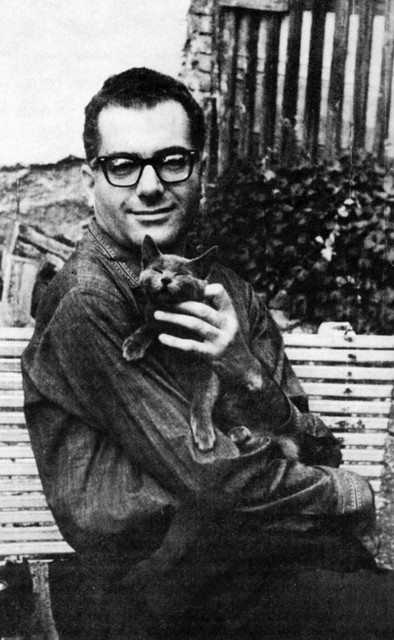
O Gregorju Strniši je bilo že veliko napisanega, našli bi precej člankov in razprav, nekaj diplomskih nalog, tudi kako magistrsko, pa vendar nobenega knjižnega dela o njegovih besedilih za popevke. Strniševo besedilopisno kariero je, kot kaže, bolje prezreti, ker, kaj pa veš, zakaj je pisal, zaradi denarja ali (kot je pri slovenskih poetih pravilo) zaradi pijače. Strniša je namesto Avsenikovih polk in valčkov, zavitih v besedila o klenih Slovencih, zaljubljenih v gore, matere, očete in vasovanje, v petdesetih letih pisal povsem drugačne reči. Predvsem poezijo. Prvo samostojno pesniško zbirko Mozaiki je izdal leta 1959. V istem času se je začel ukvarjati s pisanjem besedil za popevke.
Čez tisoč let
Menda ga je k temu pripravil sošolec, velik prijatelj in eden najboljših slovenskih skladateljev Jure Robežnik, s katerim sta zastavila kar nekaj (zdaj že dolgo zimzelenih ali celo ponarodelih) popevk. "Sem rekel, če bi kaj zaslužil, pa je začel leta, 1961 ali 1962. Hitro je dojel, za kaj gre, saj je obvladal teorijo, bil pa je tudi nadarjen pesnik. V popevkah enako kot v poeziji govori o vprašanju večnosti, transcendenci, že Orion je tak. To je temelj njegovega razmišljanja," meni Robežnik. In, kot kaže, so besede iz Oriona: "Čez tisoč let, ko naju več ne bo," postale podlaga za marsikatero drugo popevko za slovensko dušo, ki celo v trenutkih sreče razmišlja o žalosti, minevanju in smrti. Po nekaterih drugih pričevanjih naj bi bil Strnišo prvi nagovoril k pisanju besedil igralec Janez Čuk (Vesna, Ne čakaj na maj). "Gregor je popevke, čeprav so zelo dobre, jemal izrazito kot sredstvo za preživetje. Ko ga je Čuk prosil, da bi pisal, je rekel, pa kaj bom jaz to pisal, to je sranje. Preživljal se je z inštrukcijami iz matematike. Pregovoril ga je šele Robežnik z dovolj visokim zneskom. Gregor je imel s tem moralne probleme, ampak to je bil biznis. Mnenja o popevkah pa ni nikoli spremenil," trdi Strnišev prijatelj, liberalni politik in literat Peter Božič.
S tem, da je Strniša besedila pisal zaradi zaslužka, se strinja tudi ena najboljših slovenskih popevkaric in pevka, ki je bržkone zapela največ njegovih pesmi, Majda Sepe: "Ko je začel pisati besedila, je bil v finančni stiski, ni mogel prav veliko objavljati in zaslužiti." Pravi pa tudi, da je Griška, kakor so ga klicali, v bistvu začel pisati popevke že konec petdesetih let, a pod psevdonimom Andrej Žitnik. Največ je pisal v začetku šestdesetih. Pisanje besedil je takrat zaradi pomanjkanja programa v slovenščini spodbudil Radio Ljubljana. Sprva so se znašli tako, da so prevajali tuje hite. "V tem je bil Griška pravi mojster," se spomni Sepetova. Obvladal je rime in logično razmišljanje, govoril je angleško in nemško, razumel italijansko, zato je prevajal vse. Zaradi bogatega besednega zaklada je to delal dobro in hitro. "Znal je pisati pesmi in misli voditi prav tudi v butastih tekstih." In še Majdina anekdota: "Leta 1962 sem posnela Come fly with me Franka Sinatre, fajn štikelc o nekem pilotu, ki se z dekletom vrne na zemljo, stopi v sobo ... in "make a pizza". Takrat se nam še sanjalo ni, kaj je to pica. Zmazali smo se kar tako, da "ostaneva tukaj". Tako smo bili izobraženi, vse smo vedeli, ko si mlad seveda vse veš, ampak tega pa nismo vedeli, kaj je pica."
Pravzaprav je Strnišev prihod v popevko pomenil konec obdobja instrumentalne muzike in jazza. "Nekateri pesniki so poskusili, a tega niso nikdar dojeli. Strniša je pisanje popevk utemeljil, da je bilo točno na vižo pa še fajn, lepo pa še logično," meni skladatelj Jure Robežnik.
Marijanca Vojnovič je bila v času največjega razcveta slovenske popevke glasbena urednica na ljubljanskem radiu. Tistega obdobja se spominja z vidika festivala, ki je sprožil razvoj izvirne slovenske popevke, in redaktorskega dela, ki je zajemalo oblikovanje oddaj za zadovoljitev okusa poslušalcev. V oddajah V nedeljo zvečer in Melodije po pošti so največkrat predvajali tri Strniševe skladbe. Lado Leskovar je prepeval Bil sem mlajši kakor ti, Majda Sepe pa Šuštarski most in Siroto. S Slovensko popevko je bilo drugače, za festival ni bilo dovoljeno prirejati tujih skladb, zato so Strniševa festivalska besedila veliko pomembnejša. Tukaj ni dovolil ne vmešavanja ne vplivanja, šlo je za pravo delo, čeprav teoretik Drago Bajt v Interpretacijah trdi, da je bil Strniša nad popevkami vzvišen in besedil ni hranil. V šestdesetih letih so glasbo za popevke pisali izobraženi glasbeniki, ob njih pa so stali tekstopisci, ki niso bili le po naključju pravi pesniki. Strniša recimo. "Dvignil je slovensko popevko na raven, ki je dandanašnja glasba ne dosega. Ne samo kot pesnik in dramatik, tudi s popevkami je veliko prispeval k splošni kulturi naroda," pravi Vojnovičeva. Sicer pa je že prva Slovenska popevka leta 1962 na Bledu Strniši prinesla prvo nagrado za besedilo Zemlja pleše v izvedbi Nina Robića. "Orion saksofon, Mesec kontrabas..." Naslednje leto je dobil nagrado za Malokdaj se srečava Lada Leskovarja, nenagrajeni Orion pa je tako ali tako ena najboljših slovenskih popevk. Do sredine sedemdesetih let se je na festivalih, pa tudi mimo njih zvrstilo še nekaj velikih uspešnic, denimo Utrinek in Na vrhu nebotičnika (Mala terasa), ki je doživela rekordno število priredb, v izvedbi Magnificovega U'redu pa celo nekakšno novo mladost. Uspešne so bile tudi Bele ladje, Ne prižigaj luči v temi, Na Zmajskem mostu, Spominčica, Na Ljubljanskem gradu, Vagabund, Lonec brez medu, Leti, leti lastovka ... Ampak to je seveda le del repertoarja. V radijskem in SAZAS-ovem imeniku zasledimo skupaj več kot petsto naslovov skladb, izvirnikov, prevodov in priredb, ki nosijo njegov podpis.
Kaj pa kakšna prava recenzija njegovega dela? Morda tale iz ust Svetlane Makarovič, ene njegovih življenjskih sopotnic: "Ta svet, ki ga imaš v sebi, pronica v vse žanre popevke, saj je bila recimo Gregorjeva zaljubljenost v zvezde kriva, da je Orion tak ... ah ... Orion je najlepša slovenska popevka za mene. To je žanr, ki seveda ni enakovreden poeziji. Po drugi strani pa imam dosti raje dobro popevko kot slabo poezijo. Obojega je kar precej." Tudi drugi pesniki imajo o Strniševi poeziji visoko mnenje, vendar pisanje besedil povezujejo s pesnikovim večnim pomanjkanjem denarja. "Ker je, razen v poznejšem času, ko je pisal tudi nekaj proze, pisal izključno poezijo, je tudi živel v klasičnem smislu siromaštva. Nekoč mi je povedal, koliko honorarja je dobil v enem letu. Vprašal sem ga, Gregor, kako pa sploh lahko živiš. Je rekel, vidiš, živ sem, saj je vseeno, kako," pravi Ciril Zlobec. Natančneje o njegovem siromaštvu govori eden njegovih zadnjih prijateljev, Milan Kleč, prav tako slovenski pesnik in dramatik: "V Daj Dam je hodil vedno na pasulj. Ali je pojedel en kruh ali dva, je bilo odvisno od tega, ali si je privoščil še čaj v Nebotičniku. Sproti je kadil malo slabše cigarete, za priboljšek je imel pa malo boljše."
In zakaj je v začetku sedemdesetih let nehal pisati besedila za popevke? "Ni se bilo treba veliko truditi, da so bili, glede na njegovo občutljivost, morda tudi po nerodnosti, nevljudni. To je bilo dovolj, da se je umaknil in nehal. Mislim, da je zelo velika škoda. Če pomislim na vrhunce, ki so bili doseženi z Gregorjem Strnišo in njegovo generacijo, se mi zmerom stoži po tej možnosti, ko je bilo oboje - popularna glasba in visoka kakovost," meni pesnik Ciril Zlobec. Od popevk naj bi se bil dokončno poslovil, ko je požel prve večje uspehe na "pravem" umetniškem področju, ko so začeli uprizarjati njegove drame. Majda Sepe pravi, da se mu s tem ni bilo več treba ukvarjati. Spominja pa se, da je najdlje "ostal" s skladateljem Borisom Kovačičem.
Prinesi mi rože
Ansambel Borisa Kovačiča s pevko Stanko Kovačič ni bil povsem navaden ansambel. Pravzaprav niso bili niti povsem zabavni niti povsem narodni. Primer je skladba Prinesi mi rože. Valček, ki bi ga težko umestili v katerokoli od omenjenih kategorij. Boris je že umrl, Stanka, ki je veljala za specialistko za prepevanje valčkov, pa se še vedno spominja možakarja, ki je pisal besedila za njene največje melodije.
"Boris je pisal melodije. Kako je izvedel za Gregorja, ne vem. Postala sta izredno dobra sodelavca. Skupaj sta naredila veliko. Pesmi so bile preproste, vsakemu človeku razumljive. To se kaže tudi sedaj, ko je že skoraj štirideset let od tega, pa nekatere še živijo. On je znal tako lepo z malo besedami povedati. Ali pa je povedal celo zgodbo, v pesmi Mati, recimo, ali pa v Kitari." Stanka je Strnišo spoznala kmalu po tem, ko je začela prepevati v Borisovem ansamblu. To je bilo leta 1960. Čeprav je imel ansambel tudi druge tekstopisce, je največ besedil zanj napisal Strniša. "V Rožno dolino sva ga šla večkrat obiskat. Ponavadi s kakšno idejo za melodijo. Boris, mu je rekel, šimelj mi naredi! Boris je prej napisal melodijo in mu jo potem odnesel. Je bilo tudi nekaj takih na že narejeno besedilo, ampak najraje je delal tako." Sicer pa so se družili tudi zasebno. "Spomnim se samo tistega lepega sprehoda na Cankarjev vrh. Tega se prav živo spomnim. Čeprav sta v glavnem govorila Boris in Gregor. Mislim, da sta bila prijatelja. Ali pa zelo dobra znanca. Nikdar ni zameril, če Borisu mogoče kdaj besedilo ni bilo všeč ali če je hotel, da bi bilo drugače. Ga je čisto mimogrede popravil. Bil je strašno nekompliciran človek, izreden človek."
Kovačičev ansambel je igral skladbe na okoli trideset Strniševih besedil, najslavnejša pa je Prinesi mi rože, saj veste, ko boš prišel, pa naj bo pomlad ali sanjavi september. Med skladbami narodnozabavnih ansamblov sicer najdemo tudi Strniševa besedila za Lojzeta Slaka, Miho Dovžana in še nekatere, besedila pa so, če gre zaupati stroki, visoko nad zgodbami, ki jih ponujajo drugi narodnozabavni tekstopisci.
Kot že rečeno, družba je rada zahajala v hribe. Vital Ahačič, harmonikar v ansamblu, Boris Kovačič in Stanka. Vračali so se s Kofc nad Tržičem, kjer je bil hrib poln modrih encijanov. "Avsenik je imel ravno murke, ko "encijan plav ves prešerno bahav nežno vabi..." Borisu je hodilo po glavi "encijan plav, encijan plav". Pa je rekel, tega ne smemo. Potem pridemo domov, kar v gojzarjih se je usedel za pianino in začel preigravati melodijo, ki mu je rojila po glavi. Takoj sva šla h Gregorju, ker je bila to res pesem trenutka. Boris mu je razložil, kaj bi rad, in Gregor je napisal pesem kar za vse rože." Druge skladbe niso nastajale tako hitro. Ponavadi sta se Kovačič in Strniša zaprla v kakšno sobo in štrikala. In menda je Gregor kuhal izvrstno kavo, to potrjuje večina tistih, ki so jo kdaj poskusili. Poleg Stanke Kovačič tudi Majda Sepe: "Krasno črno kavo je kuhal. Je zabičal, vedno se mora dati v kavo polovica male žličke kakava, ko se kuha. Potem ima še boljši okus."
Zanimivo pa je, da Strniša kljub vsemu Stanke Kovačič ni prišel nikoli poslušat v živo. Na Slovenski popevki pa je bil. "In to enkrat, ko je ubogi Stane Mancini dobil hčerko, potem je pa ves tekst zamešal. Gregor je sedel pred nama in se je tako presedal od nervoze, ko je slišal ta "svoj" tekst. Mancini je bil ves zmeden od sreče, od hčerke. Pesem je sicer stekla, prišel je do konca, vendar to ni bilo Gregorjevo besedilo in je bilo res hudo. Nekaj je pel, zato da ni nehal. V Ljubljani so bili namesto golobov galebi... Zmagal pa ni," pravi Stanka Kovačič.
Kakorkoli že, Strniša je v sedemdesetih letih večinoma prenehal pisati popularna besedila. Zaradi uspehov v dramatiki in poeziji? Morda so razlogi, kot smo že nekajkrat opazili, banalnejši. Menda so začeli v tistem času besedila plačevati slabše. Konec liberalizacije, konec popularnosti popevk - težko je natančno ugotoviti razloge. V času največje popevkarske dejavnosti je Strnišo najbolje poznala Svetlana Makarovič in tudi njo je navdušil za pisanje besedil. "Da sem začela pisati tekste, je kriv Gregor Strniša. To je bila ljubezen na prvi pogled. Ko sva bila enkrat skupaj, nisva mogla več narazen." Ljubezen, pomešana z motivi za slovenske popevke. Romantično. "Se je zgodilo, da se Gregorju kakšnega teksta včasih ni dalo speljati, pa sva ga skupaj. Potem sem začela tudi jaz dobivati naročila, tako kot je on rekel temu - A bova zdaj en tekst iz prsta izcuzala? Pa sva ga. Pa je včasih, ko je pisal, name zatulil, daj, hudič, najdi mi eno rimo, pa da ne bo na -i. Potem sva iskala rime. Včasih se je mudilo, je bilo treba oddati tekste, pa sem jaz malo stopila poleg." Makarovičeve se najbolj spominjamo po besedilih Srne in Naš mali avto, Strniša pa je seveda napisal več hitov: "To je orjaški opus. Čeprav ni imel glasbene izobrazbe, tudi pretiranega posluha ni imel, je pa rad pel," trdi Makarovičeva.
Napad na sistem
Sicer pa je Gregor Strniša veljal za zelo vestnega in študioznega umetnika. Jure Robežnik je to opazil že na fakulteti. "Dolgo sva se poznala, saj sva leta 1952 oba vpisala germanistiko. Skupaj smo hodili na izlete, predebatirali smo noči, s Petrom Božičem smo šli kdaj plesat v Rio. Ampak na fakulteti je bil Gregor vseved. Vedel je vse. Med predavanji se sicer sploh ni oglašal, ko je bilo predavanj konec, pa nam je on še naprej predaval," se spominja kakšno leto starejšega mladeniča. "Zanimivo je, da je izpite in diplomo naredil zelo pozno." Strniša je tudi maturiral nekaj let pozneje kot sošolci z gimnazije. Pa ne zaradi neznanja. Njegovo mladost je dva tedna pred maturo pretrgala aretacija. Pri komaj 18 letih je bil obsojen na dve leti in pol zapora. "To je zelo vplivalo nanj, v sebi je imel zasidrano neko tragiko. Čeprav takrat tega nismo vedeli," se spominja Ciril Zlobec. Ozadje aretacije najbolje pozna Janez Stanek, Strnišev sošolec. "Gregor je bil v gimnaziji korajžen in energičen mladenič. Sošolci iz generacije '49 so mi pravili, kako se je sprl s profesorico filozofije in vztrajal pri svojem," pravi Stanek. "Pri Gregorju doma niso bili za komuniste. Na gimnaziji so se prav tako burili duhovi, obstajale so skupinice drugačemislečih, v katerih je sodeloval tudi on." Spomladi 1949 je tik pred nočjo na vrata Strniševe hišice na Cesti V. nepričakovano potrkal Gregorjev bratranec, ki se je pisal Palovec. Mamin nečak, ki je po vojni prebegnil v Avstrijo, je prišel iz Gradca, sorodnike pa prosil, ali lahko za nekaj dni ostane pri njih. "Bratranec je bil agent odporniških antikomunističnih sil, ki je bil namenjen v Zagreb. Hotel je vzpostaviti stik z opozicijo. Strniševi so sicer slutili, da je čez mejo prišel ilegalno, vendar ga niso prijavili. Bil je sorodnik, ponudili so mu pomoč. Zato so jih obtožili rušenja sistema," pravi Stanek. Devetnajstega maja 1949 so Gregorja med poukom iz razreda poklicali v ravnateljevo pisarno. Tam so ga pričakali miličniki. Istega dne sta bila aretirana tudi mati in oče. Stanek pravi: "Dogodek je imel vzrok v okoliščinah, na katere Gregor ni mogel imeti praktično nobenega vpliva ... bratranca je v hišo sprejel oče... težko, da bi glede tega imel kakšno besedo sin." Kljub temu je javni tožilec na ljubljanskem okrožnem sodišču 26. avgusta 1949 zoper skupino osmih oseb, med katerimi je bila vsa Strniševa družina, vložil obtožbo, ker "so se ... povezali s pobeglimi emigranti in vojnimi zločinci, ki so v inozemstvu organizirali združbo, katere cilj je nasilna zrušitev obstoječe državne ureditve v FLRJ ... ter so dajali tem špijonom, ki so prišli ilegalno prek državne meje ... s posebnimi nalogami, materialne ugodnosti ter so s tem tudi sami sodelovali v omenjeni zločinski združbi." Oče je dobil leto zapora, mati osem mesecev, prebila jih je v taborišču v Rajhenburgu. Zaplenili so jim vse imetje. Gregor je bil obsojen na dve leti in pol, seveda z izgubo vseh državljanskih pravic. "Z bratrancem je šel po mestu, povedal mu je, katera stavba je katera, s seboj pa je imel šolski zemljevid Ljubljane. To je bil zanje napad na socialistični sistem. Najvišjo kazen je dobil, ker se je z bratrancem največ družil," ugotavlja Stanek, ki je preštudiral dokumente, obtožnico in o Strniševih zaporniških dneh govoril z dvema njegovima sojetnikoma. Pritožili so se na vrhovno sodišče. Posledica: oče je dobil dve leti, Gregor pa štiri leta s prisilnim delom. Potem je na več lokacijah v Ljubljani in v taborišču Inlauf na Kočevskem odsedel in prisilno delal na gradbiščih in v kamnolomu do 30. junija 1951, ko so ga pogojno in predčasno izpustili. Jeseni se je po dveh letih zapora vrnil v šolo. Maturiral je leta 1952, skupaj z mlajšim sošolcem Janezom Stanekom.
Aretacija in zapor sta dokončno oblikovala Strniševo samotništvo in ga (verjetno prezgodaj) določila za zrelo osebnost. "Zapor je bil seveda bridka, usodna izkušnja, ki je po eni strani to samotništvo do kraja utrdila, še bistveno povečala in utemeljila Gregorjevo nezaupanje do sveta, po drugi strani pa ga je očitno učvrstila v njegovi notranji vztrajnosti, odpornosti in volji, ga izzorila, obogatila s spoznanjem življenjske resničnosti ter ga vrednostno in večinoma tudi nazorsko dokončno oblikovala," meni Stanek. Vseeno je Strnišo preteklost preganjala še leta. "Za njim se je vleklo to, da je bil obsojen na prisilno delo. Bil je izrazito protirežimski človek in tedanja oblast ga je dejansko dušila in poskušala spraviti čisto na nič. Velikan poezije je bil že pri zbirki Mozaiki, vendar je bila ta namerno spregledana. Preživljal se je s tem, da je pisal tekste za popevke, ker ga kot pesnika sploh niso hoteli priznati," je prepričana Svetlana Makarovič. In kljub temu, da naj bi bili honorarji nizki, je z njimi odkupil hišico v Rožni dolini, v katero so se smeli Strniševi vseliti po prihodu domov in v kateri je pesnik potem živel vse življenje.
Pesnikova smrt
Milan Kleč, sodobni slovenski pesnik in pisatelj, je bil v zadnjih letih velik Strnišev prijatelj. Poznal ga je kakih pet let. "Veliko sva se družila, mislim, da sva celo pretiravala. Le da se midva nisva pogovarjala o literaturi. Skupaj sva sicer padla blizu literature. Srečala sva se na nekem literarnem večeru. Najbrž. To je bilo druženje, predvsem zato, da imaš odnos do nekih stvari. Njega je tudi zmanjkalo potem, ker ga je izgubil, ne vem, ali so to popevke ali je novorevijaška visoka literatura ali je to odnos do otroka, ki ga je izgubil, do žene, ki mu je ušla. Dobro, saj ga je zakuhal. Ampak izgubil je odnos."
Kleč pravi, da se sicer najraje druži s slikarji, da se mu ni treba pogovarjati o literaturi. S Strnišo se mu na srečo ni bilo treba. "Skratka, počivala sva. Pili smo ga pa se pogovarjali o babah. Kot pobalini. Stresali šale. Mislim, bili so čisto klasični pogovori. Življenje. Nekoč sem mu skrival, ko sem pil. Dajal je občutek, kot da v življenju ne bi spil kozarca. Pa sva rekla, naslednjič, ko se vidiva, bom trezen. Potem je bil pa že odvisen, ko sem ga srečal..." Menda je bilo najbolj mučno, ko je bil na koncu ... "On bi še pisal, ampak je bil toliko pošten, da je videl, da bi se samo ponavljal. Potem je izgubil vso odgovornost, saj veš, ko se zalotiš, da spiš do dveh. Pri pijančevanju se aktiviraš, ko moraš malo ustaviti. Če izgubiš to, je konec." Na koncu si je našel veliko mlajše prijatelje, kot sta Milan Kleč in Jure Potokar. Njegova generacija se je porazgubila. "Eni imajo žur fiksa, novorevijaši imajo svojo oštarijo. Ampak to je družinsko življenje. Gregor je bil zelo vesel, ko je videl, da še obstajajo ljudje, ki ga serjejo, neambiciozno. Da vseeno še kaj poleg počnejo, da imajo odnos do nekih stvari," ugiba Kleč. Imel je ženo, imel je tudi otroka, ampak stvari je potreboval zaradi repertoarja. "Enkrat mi je pravil, da je dobil Prešernovo nagrado ... in je šel nekaj spit. In je jasno, da je ženska vedela, da se ne bo ustavilo pri eni steklenici. On je rekel, da je prišel domov, vendar s sekiro, potem so ga odpeljali policaji. Ne govorim, da je kaj naredil, popolnoma nič ni naredil, samo ona se je zavedala dejanskega repertoarja, ki ga je zelo dobro poznala. Vedela je, da pitje ne bo trajalo samo dva dni in da je ta repertoar malo neokusen za otroka, če ga je že ona morala prenašati. To ji je zelo zameril." Strniša je bil pijanec in bolj, ko so se bližali zadnji dnevi, bolj je pil, se spominjajo njegovi prijatelji. "V Rožni dolini je bila trgovina takoj čez cesto. In tam so mu rekli, vse dobite pri nas, gospod Strniša, samo pijače ne. On pa je bil čisti otrok. Enkrat sem prišel, pa me je blazno čakal, bil je živčen, ker se je trgovina zapirala. Odprta je bila do devetih, jaz pa sem prišel petnajst minut do devetih. Jasno, njemu niso postregli. In potem vprašanje, kako zakamuflirati. Stal je na prstih in me gledal skozi okno, ali mi bodo dali pijačo ali ne," se spominja Kleč. Za boljšo predstavo o Strniši v osemdesetih letih ponuja tole anekdoto: "Pravil je, da so ga samo enkrat spravili v Rovinj ali nekam na morje. A so ga morali že naslednji dan odpeljati nazaj, ker ni vedel, kje je trafika. Ali pa niso imeli njegovih cigaret. Brigala ga je Amerika. Ampak on je naredil iz tega teorijo, da so, kdove zakaj, ljudje povsod isti. Hiše so hiše, babe so babe." Zgodba seveda posredno govori o Fullbrightovi štipendiji, ki naj bi jo bil dobil pesnik. Namesto v Ameriki je končal na Jesenicah, kjer se je obrnil proti domači Rožni dolini. "Njega so zanimali drugi planeti. Ampak tudi tukaj se je zajebal. Temu sva se potem smejala. Imel je par alkoholnih delirijev. In je enkrat zelo naivno pripovedoval, kako k drugim ljudem v delirijih iz vtičnic prihajajo vesoljci, da jim vesoljske ladje pristajajo pred hišami. On si je to blazno želel, pa se je zajebal. K njemu so prihajale samo podgane. Vse bi dal za to, da bi bil v delirijih na drugih planetih, ampak ker je usoda taka svinja, se je tukaj blazno poigrala z njim," trdi Kleč.
Jure Potokar se spominja zadnjih dni Gregorja Strniše drugače: "Gregor je bil pijanec. Vendar je lahko nehal piti za dolgo časa, potem pa je bilo zadosti, da je nagnil samo en kozarček. Ko smo se dobivali v Unionu ali pri meni, ni nikoli pil. Takrat je bil absolutno trezen, celo delal je, mislim, da je pripravljal roman. Je pa pil v začetku leta 1987. Nato je izginil, nekaj tednov nismo slišali o njem. Ni odgovarjal na telefonske klice, ni se pojavljal. Potem ni več hodil ven. Menda je poklical taksi, dal taksistu denar in taksist mu je pripeljal pijačo. Čisto na koncu, dober teden, preden je umrl, me je klical sredi noči, ob treh zjutraj, naj pridem k njemu. Bila je grozna zima, bilo je ogromno snega, bilo je okoli minus 15 stopinj. Jaz sem sicer imel avto, ampak je bil zakopan v snegu in ob treh zjutraj je bila edina varianta taksi ali pa peš. Od Bežigrada do Rožne je bila po tistem snegu kar precejšnja razdalja. Zato sem mu rekel, oprosti, ne morem, se vidimo jutri. Naslednji dan sva šla z Milanom tja, a ni odprl. Nisva hotela notri, čeprav se nama je zdelo, da vrata sploh niso zaklenjena. Naslednji dan ali dva dni kasneje sva pa vseeno šla in vstopila. Po vsej postelji so ležale steklenice. Nobena ni bila čisto prazna. Ko je padla, zanj enostavno ni več obstajala. Bil je v komi, v nezavesti. Poskušala sva ga spraviti k sebi. Klical sem bivšo ženo, ali naj ga odpeljemo v bolnišnico, je rekla, ja, ampak potem vas ne bo nikoli več v življenju pogledal. Ker bolnišnica je absolutno pomenila, da ga bodo odpeljali v Polje na psihiatrijo, ker je imel že zgodovino tega." Nazadnje so ga vseeno odpeljali v bolnišnico. "Imel sem res slabo vest, nisem ga mogel obiskati. Vse skupaj se je dogajalo v sredo, četrtek. V soboto je prišel že toliko k sebi, da je tudi malo spregovoril s tistimi, ki so ga šli obiskat. Potem je pa umrl. In to zato, ker se je sam tako odločil," razmišlja Potokar. Gregor Strniša je umrl 23. januarja 1987 v Ljubljani. Milan Kleč misli, da je živel pravzaprav kot uradnik: "On je bil pezde. Res. Simpatičen pezde." Morda. Strniša, ki je imel ob popevkah še marsikaj povedati. Morda tole, kar je nekoč rekel prijatelju Petru Božiču: "Je rekel, vesolje je v človeku, ljudje na zemlji smo pa plesni. Zato moramo iti."
(Citati Svetlane Makarovič in Cirila Zlobca so iz cikla oddaj Zlata šestdeseta, TVS, citat Draga Bajta in nekateri Janeza Staneka pa iz knjige Gregor Strniša, ki je v zbirki Interpretacije izšla pri Novi reviji leta 1993.)
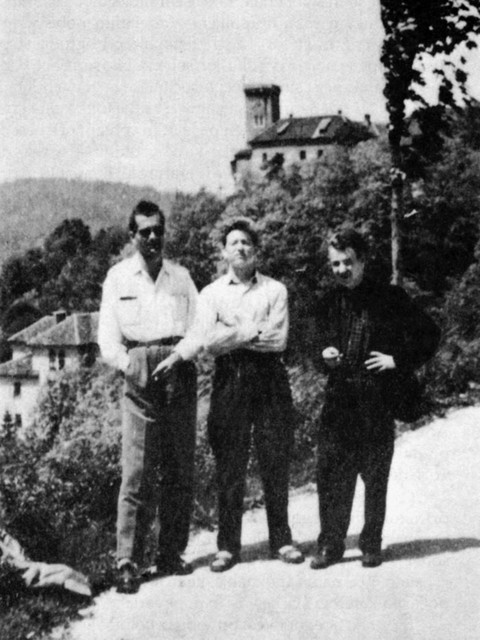
V družbi s Toonom Wegnerjem in Petrom Božičem junija 1956
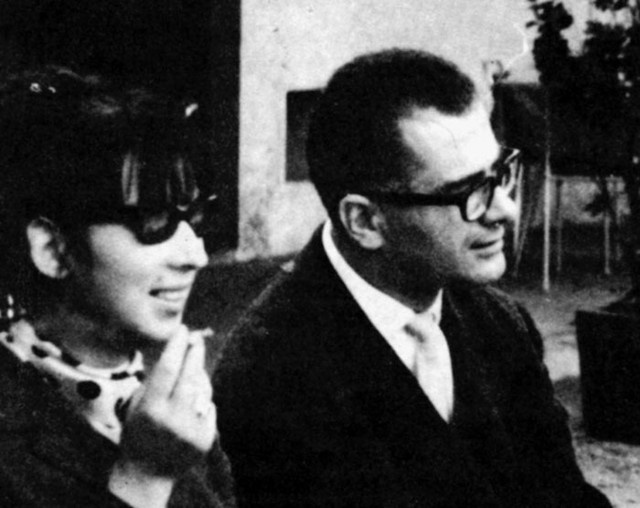
V družbi s Svetlano Makarovič, 1966
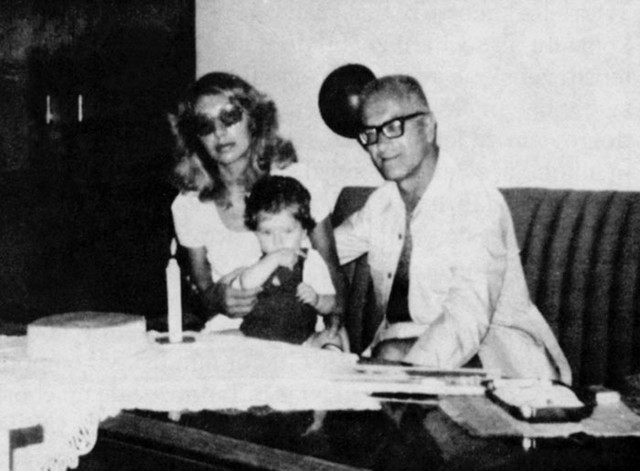
Z ženo Theo in hčerko Erno ob njenem prvem rojstnem dnevu, 1981
Drevesa odpro debla s suhim pokom
in temna srca, ki so skrita v njih,
pričnejo biti z glasom daljnih bobnov.
Od žolte lune siv lišaj visi.
Tedaj se dvignejo veliki kamni,
na tenkih nogah hodijo okrog,
kakor orjaški sivi pajki,
in grizejo mehke obraze gob.
Na drugi strani gozda, v temni hiši,
v globokih, nizkih jamah svojih sob,
spijo ljudje, kot dolge, sive miši.
Velike mačke sanj se igrajo z njimi.
JESENSKA PESEM
Še vedno je nekje,
poletje temno,
tiho poletje
s tvojimi očmi.
Odšlo je, kakor stara karavana,
čez reko časa. Zdaj sedi
na drugem bregu, med zamolklimi
drevesi — mirna, sklonjena postava.
Kot da so tam velika, temna vrata
iz brona, ki so vrezani na njih
nejasni liki drevja in neznanih ptic —
tih, bronast gozd. V njem pa še vedno čaka,
ujeto v nežno kretnjo,
kot da spi,
temno poletje
s tvojimi očmi.
HVALA, MOJSTRU!
nedelja, 4. marec 2018
torek, 24. oktober 2017
torek, 3. maj 2016
torek, 2. februar 2016
RADOJKA ŠVERKO NA LJUBLJANSKEM GRADU

Večer s hrvaško pevsko divo
Svojo bogato mednarodno kariero je začela z nagrado na festivalu v Puertu de la Cruzu leta 1969. Leto kasneje je bila nagrajena na festivalu v Rio de Janeiru za najboljšo interpretacijo in je nasledila Janis Joplin, ki je to nagrado prejela pred njo. Od takrat dalje je nastopala in prejemala festivalske nagrade po vsem svetu: od Tokia, Seula, Los Angelesa, Caracasa, Curacaua do Madrida, Firenc in Aten. Leta 1970 je zablestela tudi v domovini – na Splitskem festivalu s šansonom Kud plovi ovaj brod; tudi pozneje je prejela številne festivalske lovorike. Radojka Šverko je bila leta 2014 nagrajena z najpomembnejšo hrvaško nagrado porin za življenjsko delo. Na ljubljanskem koncertu se bo ob spremljavi svojega dolgoletnega pianista Vladimirja Babina predstavila s programom, ki bo obsegal širok repertoar od njenih avtorskih šansonov do italijanskih kancon in mednarodnih zimzelenih melodij.
NUJNO!!!!!
Prilagam še njeno avtobiografijo.
Rođena sam u Pazinu, 9. travnja 1948. godine. Moram priznati da sam kao dijete mnogo vremena provodila pred ogledalom. Kada su mi bile četiri godine, preselili smo iz Pazina u kuću u Buzetu. Tamo sam mnogo vremena provodila igrajući se sa dvije sestre, starijom Mladenkom i mlađom Jadrankom, te bratom Mladenom. Važila sam za djevojčicu koja se mogla popeti na svako stablo u Buzetu. Otac mi je bio službenik i živjeli smo u stanu s vrtom, urednim poput ljekarne. Bilo nam je teško samo s očevom plaćom, ali gladni nismo bili. Otac mi je bio miran, pedantan i usadio mi je ljubav prema radu u vrtu, dok sam uz majku naučila voljeti kuću, tako da se ni sada ne ustručavam bilo kakvog posla u kući. Imam malu papigicu, koja me uvijek čini sretnom svojim čarobnim cvrkutanjem ali mi je strašno žao što je zatočena u krletci. Imam i maloga hrčka, tako je umilan i drag. Hranim ih, čistim, a moja mila kćer Ana mi u svemu tome pomaže. Kada mi je teško, a takve dane proživljavaju svi ljudi, Ana me iznenada zna razveseliti, tako što me odvede nekamo, na neko lijepo mjesto, pored mora i onda brzo zaboravim sve probleme koji nas okružuju. Volim svoju obitelj i za nju bih žrtvovala sve. Volim i cijeli svijet, sve ljude i optimistično prilazim budućnosti. Mir u kući, mir u ljudima, mir u zemljama.... To je taj ideal kojeg očekujem, kojemu težim, jer samo to može donijeti spokoj svačijoj duši i svakome srcu.
Osvojila sam tek sedmo mjesto, ali od svih pjevača koji su se tada tamo pojavili, jedino sam ja još uvijek tu, na sceni. Uz ekonomsku školu, skrivajući to od roditelja, polazila sam i glazbenu školu kod prof. Dubravke Stopić. Glazbenu školu ipak nisam završila jer mi je bilo naporno pohađati dvije škole, tim više što sam uzimala još i satove solo pjevanja. Gospođa Marija, kod koje sam učila solo pjevanje, u svom nastojanju da me osposobi za nešto trajnije mi je davala jako teške vježbe za razvijanje tehnike disanja i time me potpuno iscrpila. Nisam mogla svladati sve te obveze.
Ekonomska škola mi nije išla, a i znala sam da nikada neću biti ekonomist. Trebalo se prehraniti jer je stipendija bila dostatna tek za plaćanje kreveta, trebalo je nekome pričuvati djecu i raditi da bi se moglo opstati. Dakle, trebalo je biti – ekonom. Ipak, oduvijek sam duboko u sebi osjećala onaj glazbeni zov, zov umjetnosti. Znala sam da je glazba ono što se zove moja budućnost. Ma koliko bio trnovit put do željenoga cilja, bila sam spremna. Polako sam ulazila u ring preživljavanja u svijetu show businessa. Moji pjevački uspjesi ipak nisu ostali bez odjeka i počela sam raditi s orkestrom \"Istrakord\". Nisu to bili moji vršnjaci, već ozbiljni ljudi, tako da sam se među njima osjećala zaštićenom. Svirali smo u Puli, obilazili obližnja mjesta, prostore u kojima se tada odvijao glazbeni život. I u toj dobi, sa 16 godina, pjevala sam seriozniji repertoar, što nastojim činiti i danas. A tada sam lomila jezik da savladam engleske tekstove. Vjerujem da se isplatilo i da je publika to prepoznala. Posao mi je uvelike olakšao školovanje. Mogla sam si neke stvari priuštiti i nekako je moja odbojnost prema tom gradu omekšala. Pula je, zapravo, fascinantan grad. Ali kada je čovjeku teško, ne vidi oko sebe sve te lijepe stvari. To su gledali turisti. Ja sam gledala knjige, note i učila. 1967. godina je bila značajna. Dogodile su se ružne ali i lijepe stvari. Te godine je umro moj otac. Dogodilo se puno toga: Matura, zatim, moja prva velika ljubav, te ponuda za brak. Te godine dolazim u veliku obitelj svoga supruga, gdje sam slijedeće godine rodila kćerku Sandu. Bilo mi je dvadeset godina. Zato nije ni čudo da sam već baka jer je moja kćerka također rodila u dvadesetoj. Neke stvari su jednostavno predodređene. Iako sam imala dijete, raditi sam morala. To je imperativ cijelog mog života. Već tri mjeseca nakon poroda nastavila sam pjevati, što mi je bilo vrlo naporno jer je navečer dijete trebalo okupati, nahraniti, a nakon toga se našminkati i raditi ponekad do dva poslije ponoći, da bih ujutro zbog djeteta ustala u šest. Suprug, također glazbenik, pomagao mi je u pisanju aranžmana ili svirao klavirsku pratnju, a svekrva je nastojala preuzeti što veći dio brige oko djeteta. Zahvaljujući toj podršci obitelji, ipak sam uspijevala baviti se poslom za koji sam se opredijelila. Kad se živi u velikoj obitelji, puno je lakše : netko pridrži dijete, drugi će ga nahraniti, spremiti. U toj je kući tada, pored svekrve, mene, moga muža i kćerke, živjela svekrvina sestra, moja šogorica s mužem i djetetom i još tri podstanara.
Prvi poziv za odlazak na međunarodni festival dobila sam 1969. godine. To je uistinu bilo kao nešto iz bajke, kao iznenadna nagrada za sve što sam postigla do tada. Sa skladateljem Alfijem Kabiljom našla sam se na Kanarskim otocima i zabljesnula u plejadi poznatih pjevača iz cijele Europe. Bio je to \"Festival de Atlantico\" u Puerto de la Cruzu na kojem su nastupali pjevači iz Italije, Španjolske, Grčke, Francuske .... Uspjeh na tom festivalu otvorio mi je vrata za nastupe na televiziji, donio mi je ekskluzivni ugovor za diskografsku kuću Belter iz Barcelone, koja je tada okupljala sve najbolje što je Španjolska tada imala. Snimala sam skladbe Alfija Kabilja na španjolskom i ploče su se odlično prodavale, jer su me španjolski mediji odlično pratili. Jezik sam brzo svladala, jer mi je znanje talijanskog, koje sam stekla u djetinjstvu, poslužilo kao osnova. Dobila sam svoju emisiju na španjolskoj televiziji - sjećam se da je špica bila strašno glamurozna - a gost mi je bio Julio Iglesias. Emisija je išla uživo, u studiju je bio revijski orkestar, a moji gosti su bili i još neki tada vrlo popularni glazbenici kao što su Salome, Concita, Kristina, Don Lurio ... Emisiju je režirao Valerio Lazarov, kojeg sam već prije upoznala u Bukureštu. U Španjolskoj sam nastupila na nekoliko festivala, putovala sam u Madrid radi snimanja ploča, nastupala u Palma de Mallorci, Barceloni i dakako da je boravak na takvim mjestima rezultirao druženjem s mondenim svijetom. Članica žirija na festivalu bila je Joan Collins. Joan Collins i njezin tadašnji muž pozivali su me da dođem k njima u London i Los Angeles, ali nisam otišla. Sve je ostalo na tom druženju u Španjolskoj i onom \"vidjet ćemo se\". Nisam od onih koje sve to osobito fascinira. Bilo mi je lijepo družiti se sa Joan Collins, Shirley Bassey, ali jednako tako i sresti nekog kolegu ili kolegicu kao što su Josipa, Gaby ili Tereza. Nisam se posebno trudila da budem u društvu poznatih osoba, čak se često događalo i obratno, da su oni nastojali biti bliže meni jer sam i tada bila okružena paparazzima i novinarima. Nisam na miru mogla otići na večeru, a da se odnekud ne pojavi neki novinar. Ali meni novinari nikada nisu smetali. To su ljudi kao i svi mi, koji rade svoj posao. Neki sa dobrim namjerama, a ima i onih drugih. Ali toga ima u svakoj branši. Zato, jednostavno treba znati prepoznati dobre ljude, koji ti prilaze srcem i sačuvati njihovo prijateljstvo. To sam naučila i takva sam i danas.
U Rio de Janeiru 1970. dogodila se još jedna prekretnica u mojoj karijeri. Bio je to svjetski festival pop glazbe, na kojem su nastupali izvođači iz cijelog svijeta. Nijedan festival koji se danas održava, ne može se usporediti sa tim. Članovi žirija bili su najveće zvijezde: Ray Conief, Paul Simon, Spanky Wilson, Shirley Bassey, Burt Bacharach.... a nastupali su predstavnici iz 46 zemalja. Pjesma koju sam pjevala zvala se \"The World Is Mine\". Na velikim pozornicama i s velikim orkestrom funkcioniram bolje nego s malim, potpuno se stopim s binom. Dakako, postojala je neka doza uzbuđenja, ali bila sam toliko sigurna u sebe da mi se danas, kad ponovno proživljavam sve one događaje i ono uzbuđenje, čini kako zapravo nisam bila svjesna što se događa oko mene i što sve to meni znači. Na tom festivalu proglašena sam pobjednicom. Kada sam se već našla na sceni, počelo je nekakvo komešanje iza pozornice i meni je, već kao pobjednici festivala, dodijeljeno drugo mjesto zbog, kako su rekli, greške u prebrojavanju glasova. Na moje se mjesto popeo argentinski pjevač Piero. To je bio skandal, ali donio mi je veći publicitet nego da sam bila prva. Proglasili su me najboljom pjevačicom u svijetu, a ja sam to prihvatila kao utješnu nagradu. To je izazvalo veliki broj napisa o Alfiju Kabilju i meni. Uslijedili su festivali u Tokiju, Seulu, u Ateni, Puerto Ricu, Caracasu, Curacau na Nizozemskim Antilima, \"Bratislavska lira\", pa opet Rio de Janeiro, Los Angeles, New York, i sa svakog sam se festivala vraćala s nagradama. Davida Bowiea pobijedila sam 1969. godine i ta se godina ne spominje kad se priča o njegovoj karijeri. Danas mi se čini kao da su se svi ti uspjesi događali nekome drugom. Dodirujući zvijezde na svjetskim pozornicama, nisam dozvolila sebi uobrazilju nedodirljivosti. I danas, kada sam \"ispekla zanat\" i kada mogu reći da bez straha vladam pozornicom, svjesna sam jednakosti sebe i ljudi koji me slušaju. Mene nitko iz moje zemlje nije poslao, delegirao. Alfi i ja bili smo jedna ekipa, dok su ekipe drugih zemalja imale osam, devet članova. Svoju sam garderobu uvijek nabavljala sama. Sve moje haljine bile su rukom šivane i krojene. O mojoj se garderobi brinula moja dugogodišnja prijateljica gospođa Anita Baričević Kalina. U Riju sam nosila malu, bijelu mini haljinu, a preko nje bijeli plašt od iste tkanine, raskošno optočen nojevim perjem. Proglašavali su me najelegantnijom damom festivala i dospijevala sam na naslovne stranice svjetskih časopisa. U Riju sam imala šminkera Anaela, koji je postao poznat nakon što je dugo šminkao Verusku, tada poznatu manekenku. U to sam doba imala toliko novaca da sam ga angažirala kako bi se brinuo o mom izgledu od jutra do mraka. Nosila sam turbane ili bih imala prikladan šešir. Uspjesi u svijetu nisu promijenili ni mene, a ni odnos mojih ukućana prema meni. Onog trenutka kada bi se zastori spuštali, kada bi se ugasile kamere, u meni se javljao osjećaj - da mi je biti doma. Uvelike sam razlikovala pozornicu od kuće : bile su to dvije potpuno različite Radojke. Došla sam kao pobjednik iz Rija, gdje me čekalo dijete, svekrva, obitelj. Trebalo je kuću počistiti, pospremiti.
Između svih tih nastupa u svijetu nisam zanemarivala ni naše festivale. Pjevala sam na festivalima u Opatiji, Zagrebu, Splitu... \"Kud plovi ovaj brod\" otpjevala sam na vrhuncu svoje međunarodne karijere na Splitskom festivalu 1970. godine. Krajem sedamdesetih preuzela sam ulogu Jane u rock operi \"Gubec-beg\". U to vrijeme lagano puca i moj brak. Bilo mi je teško, ali jednostavno sam otišla iz kuće svoga muža s nekoliko kovčega, autom i djetetom. Odselila sam u Zagreb i našla podstanarski stan. Ali Sandi Zagreb nije odgovarao. Zbog alergije, bila sam prisiljena vratiti je u kuću svoga oca. Puno sam radila. Nakon \"Gubec-bega\" slijedila je uloga Nere u rock operi \"Grička vještica\", a glumački izazov prihvatila sam na nagovor Rajka Grlića, koji mi je povjerio vodeću ulogu u svom filmu \"Bravo maestro\". S cijelom ekipom otišla sam na predstavljanje filma u Canes. Iako prepuno glamura, bilo je to ružno razdoblje jer sam bila odvojena od djeteta. Neprestano sam bila na relaciji Rijeka - Zagreb i tu sam cestu prešla bezbroj puta, po ledu, snijegu i po maglama. Nakon nekoliko godina ušla sam u drugi brak. Udala sam se za Zagrepčanina i rodila kćerku Anu. Moje se kćeri neizmjerno vole i nikada među njima nisam činila razliku. Kada se Ana rodila, moja je karijera stala. Ana je imala zdravstvenih poteškoća, ali unatoč tome se suprug odlučio na rastavu kad su Ani bila dva i pol mjeseca. U to sam vrijeme imala njegovu financijsku podršku, ali sve drugo je izostalo. Bilo je to definitivno najgore razdoblje moga života. Moram priznati da su mi bile potrebne godine da opet stanem na noge. Sama. Odlučila sam proživjeti to tako kao što je došlo, pa će i proći. Bez ramena za plakanje, bez ičije podrške, bez alkohola, sedativa, družeći se s jedinim porokom, cigaretom. Uspjela sam proći sve te krize, uživajući u tome što moja Ana napreduje i raste. To mi je davalo snage. Ponekad, kad mi je bilo jako teško, gledala sam svoje trofeje i mislila je li pravedno da se ja mučim, a da moje uspjehe nitko ne vidi. Ipak, nikada nisam dopustila da se ta patnja na meni vidi, niti sam se povukla iz javnosti. Zvonko Špišić, posebno je za mene napisao pjesmu \"Život moj\", koju sam pjevala na Zagrebačkom festivalu. Smatram da je to jedna od njegovih najljepših pjesama. Trebalo mi je dosta snage da otpjevam taj tekst, jer sam u toj pjesmi prepoznavala svoj život. Ipak, život je išao dalje i ja sam se uputila u neka nova glazbena prostranstva.
Kada se dogodio rat nastupala sam , poput mojih kolega, na mnogobrojnim dobrotvornim koncertima. Nisam održavala plaćene koncerte, a i poznata je stvar da su moji nosači zvuka bili prava rijetkost. Mislim da bi netko drugi trebao dati odgovor na pitanje zašto je tome tako jer mi se konstantno javljaju dragi ljudi, iz svih krajeva, žaleći što nema mojih koncerata, a niti mojih ploča. Ja sam jako osiromašila neke svoje zalihe koje su mi trebale pomoći da lakše dišem pod stare dane. Kao kompenzaciju za ta stanja odlučila sam intenzivirati nastupe programom sakralne glazbe s profesoricom Šumak, profesoricom Očić, a napose s maestrom Alanom Bjelinskim i komornim orkestrom \"Windstrings\", jer mi je bilo neizmjerno potrebno oporaviti se nakon svih tuga. Radilo se o klasičnom programu ( Zajc, Verdi, Stradella,...) koji ima divan odjek kod publike, a moje glasovne mogućnosti tu posebno dolaze do izražaja. Nakon takvih koncerata osjećala sam se užasno umorno, ali i ispunjeno. Tako da bi umor brzo prolazio, znajući da sam učinila pravu stvar. Zatim sam se okrenula festivalu kojeg sam posjećivala na početku svoje karijere. To su \"Melodije Istre i Kvarnera\". Preselila sam ponovno u Rijeku, gdje sam i danas. Nastupam na Splitskom festivalu, Zagrebfestu, MIK-u i drugim festivalima. Izdala sam CD \"Vatra i led\" , gdje sam se približila suvremenim zvucima, CD \"Va dihe mora\" s pjesmama na čakavskom dijalektu, na kojem je i opus mojih pjesama s MIK-a, CD \"Radujte se\", na kojem je izbor najljepših božićnih pjesama, a nedavno je Croatia Records izdao moju \"Zlatnu kolekciju\" koja je rezime moje dugogodišnje karijere. 2006. godine ostvarila sam izvrsnu suradnju sa diskografskom kućom iz Skandinavije, nakon čega je snimljen CD Men Are My Best Friends, simboličnog naziva jer tu upravo pjevam skladbe, koje su do tada bile izvođene isključivo u muškoj interpretaciji. Tu barijeru sam probila i taj CD nailazi na izvrstan odjek kod slušatelja. Naravno, u planu su i neki drugi projekti, o kojima ću govoriti kada za to dođe vrijeme. Sada uglavnom nastupam u manjim crkvama sa sakralnim programom, ali običavam nastupati na većim pozornicama uz pratnju orkestra ili mojeg benda pod vodstvom prof. Vladimira Babina. Nedavno sam gostovala u jednom poljskom kazalištu, zatim u Kopenhagenu, a u planu su i koncerti u Zagrebu i drugim gradovima.
Moj životni moto je uvijek ići dalje, voljeti, a pjevat ću dok u meni bude bilo i ono malo zrno snage i dok god me publika bude željela. Jer na koncu, moja publika je, zapravo, moj početak i kraj. Kada i ako ne bude više pljeska, ako ne osjetim one vibracije koje se uzajamno vraćaju, na sceni neće biti ni mene.
Radojka Šverko.

sobota, 19. december 2015
MARK CRANEY COMPLETE DISCOGRAPHY

Letos mineva 10 let od smrti tega izjemnega bobnarja.
Ker ga poznajo le redki sem se odločil, da vam predstavim njegovo življenski delo.
Nekaj podatkov sem pobral iz njegove uradne strani http://www.markcraney.org/.
ostal pa sem ubral od povsod.
Beginnings
I started drumming the summer of my 12th year. The Christmas before that, I became a diabetic, and my parents were thinking, "Wow, poor Mark. He's going to have a plagued life; let's find something for him." So they bought me a set of drums. My dad brought them home and set them up backwards. My mother said she knew that first night that drumming would be what I would do with my life.

Growing up in South Dakota, I was isolated and couldn't see my favorite drummers to emulate them. I guess that's how I got a style of my own. I never had any lessons. I tried in eighth grade, but by then I was playing traditional grip left-handed, and the teacher said, "You're right-handed; you have to play like this." And he tried to change me over. So that was my one drum lesson in life.
In high school, I joined a teen band called The Vandals, and all the parents were into it and they'd help us out. But after awhile they were going, "Hmmmm, this isn't so cute anymore." And each parent's support would gradually fall away until it was only my parents who were still there. A big part of my success came from their support.
I was in lots of bands -- hippie bands, fusion bands -- bands with names like Rushmore, Zero Ted, The Flippers, and The Chateaux Band. There were different bands in different cities, Kansas City, Denver, all kinds of places. I always believed in leaving a band if it wasn't happening. I didn't believe in sticking it out until we all hated each other. So after awhile, I would just pack my truck up, get my dog, and split, and they'd all be wagging their fingers after me.
First Big Break
I moved to LA in December, 1975. A guy I'd worked with called me to play a club gig there. As luck would have it, I ran into Mike Miller, a guitar player friend that I grew up with in South Dakota. He was in LA working with The Fowler Brothers Band. Tom Fowler was playing with Jean Luc Ponty, and we heard he was auditioning drummers. So I called and called, but I could never get through. As soon as I gave up calling them, they called me.
I got the Jean Luc Ponty gig in January, 1976, within a month of moving to LA. That year, I recorded my first album, Imaginary Voyage, and toured the world. I was with Jean Luc for 9 months, and it was a challenge. It took everything I had to keep up with them.

When Jean Luc started to rehearse it was, "Okay, poly-rhythms in 19/8…then bang, we'd do that and then, "Okay…here's another in 5/4." We'd do that and then, "Okay…" I loved it. It was good being 23 and playing all over the world with a premier jazz artist. It was the workout I had been waiting for. I used a set of clear Fibes Plexiglass, double bass, two racks and two floor toms. I quit when Tommy Bolin offered me more money.
I was with Tommy from October to December of 1976 to promote his post-Deep Purple solo album, Private Eyes. Tommy was very gifted and innately talented. He didn't really know what he was playing, but he could play. As he would say, "I don't know sixteen bars, but I know sixteen bars." That band included Jimmy Haslip and Max Groenthal. Max became singer in .38 Special and was the original singer for Jack Mack and the Heart Attack.
It was a fun band. We were all good friends and I had worked with a lot of those guys before. At the time, I was a hard core veggie. You know, a mucous-less, ginseng, stand-on-my-head kind of hippie. Tommy nearly beat his drug and alcohol habit; he was taking vitamins and was back on the right track. But in December 1976, he flew to Miami early, before the band, and everybody - bellboys, hotel maids - started giving him stuff. Miami is the drug capital of the world, and Tommy was the kind of guy who needed his own people around him, and when he didn't, he lost control. We played a great show in Miami opening for Jeff Beck on December 3. Tommy celebrated with a lot of people that night. Tragically, he died of an overdose in the early morning hours of December 4, 1976.
After Tommy's death, the whole tour was a mess. Everyone passed the buck and lost a lot of money. It wasn't a very healthy scene. In 1977, I played and recorded with The Mark Almond band, nice English gents who let me take my Afghan, Richard on the bus. We toured the US and had a grand time.
Brother to Brother
In May of 1978, I got the gig with Gino Vannelli. It came about when I decided that maybe I could get back with Jean Luc Ponty. I called Ponty's manager, who said he'd just hired the drummer from Gino Vannelli, Casey Scheurell. I knew that Gino was on A&M Records and would need to replace Casey, so I called my friend at A&M, and a half hour later I was talking to Gino.
The next day, I went out to Gino's house and he put me under a microscope, playing drums in a bedroom of his house with his mother, father, two brothers and their wives watching. It's a unique kind of pressure, having somebody's mom staring at you. But I got the gig.

In 1979, I did the Brother to Brother tour. I got married that year, and I was also teaching and recording whenever I could, trying to build a foundation. Working with Gino was the most high-pressure, demanding, precise drum gig I ever had, and I loved it. Because Gino is a drummer, I pretty much got to play whatever I wanted, and the drums were always the second thing in the mix, after the vocals. Gino was a fun guy to be around. A nice guy. I love them all, the whole family. A great bunch. They really know what they're doing.
Jethro Tull
In May of 1980, I got the call for Jethro Tull. I had been playing on Eddie Jobson's demo in New York (cursing him the whole time because I had to take the subway carrying my cymbals.) Eddie used that demo to land a gig doing Ian Anderson's solo album. When the drummer didn't work out, Ian inquired about the drummer on Eddie's demo. They called me and I was there the next day. The album turned out so good that Chrysalis wanted to make it the next Tull Album - "A".
Ian Anderson was cool to work with. The first time I heard his voice coming through the monitor in rehearsal, It was like, "Wow! There's that voice." Ian's a very good guy who always made sure his lads were happy, which we were. I was happy with the money alone. We'd take a break and drink tea and ride motocross bikes on his 400 acres, which is now probably 1,200 acres. He also had a proper rifle range on his property where we'd go down whenever we wanted with our 12-gauges and shoot clay pigeons. It was a great lifestyle.

We toured the US and Britain in 1980, then Europe in 1981. Then, Ian wanted to give it a break for awhile, so I moved on. One of my best friends, Doane Perry, who co-produced the Something with a Pulse CD, took my place and has had the gig ever since.
I first met Doane in the mid 1970s. He called Jean Luc's management to follow up after being told that he had the Jean Luc Ponty gig. Then, they told him, "Jean Luc just heard this drummer from South Dakota that he likes." So when we played New York, Doane said, "I'm gonna see what this guy from South Dakota is like." He called me awhile later when he was in LA, and again when he got back to New York, and we developed a close friendship…even though I stole his Ponty gig and he stole my Tull gig (kidding.) .
After the Tull tour, I bought a house in Sioux Falls. It wasn't a great career move. I commuted to big cities to record, but not quite enough to keep it together financially. I saw a lot of records coming out by buddies of mine that I would have liked to have played on. In 1983, I sold the house, moved back to LA, and later got divorced. I started working with Gino Vannelli again and we recorded two albums worth of material over the next couple of years.
Kidney Failure
I played with Tower of Power in 1984. I had heard about the gig, called them, and got the audition. I always loved David Garibaldi so I knew most of the tunes, which was a very good thing because I only had one rehearsal -- the audition -- before the first gig. We talked over a few melody arrangements and that was it. It's a great band, my favorite kind of music. Lots of fun. I played with them again in 1986 and that's when I experienced end-stage renal disease.
The story goes like this: In July, 1986, I was touring with Tower of Power, and we were using small private planes to travel in. I had an ear infection. In Chinese medicine, the ear is called "The Flower of the Kidney." We dropped altitude really fast into San Francisco, and my ear started throbbing so badly…it was the worst pain I've ever felt.
I suffered through a few gigs, but I finally had to go into a San Francisco hospital. My kidneys shut down completely and I had to go on dialysis for over a year. In July, 1987, I had problems with the type of dialysis I was doing, and got a bunch of infections - there was complication after complication. I was in a coma for awhile, and they had to take off my left big toe. I couldn't eat for 3 weeks…they fed me through my neck this fluid, and...aaahhh! It was a wild time.
It was hard on my mom. She would say good-bye to me and not know if I would be around the next day. At the hospital, she would wheel me out to a little spot, and we'd just break down for a while. And then we'd dry off and get back at it, and just try to find a way. My mom was there the whole time; she was really my angel. And my father, too. He stayed at home and learned to do things that he had never done in 47 years of marriage. After 3 months in the hospital, I came out in a wheelchair. That was in November, 1987.
1987 Benefit
The Woodland Hills Drum Club started in the garage of my house on Clark Street in 1985. Back then, Gregg Bissonette, Myron Grombacher, Doane Perry and I would hang out, then go into the garage and spray for awhile. Over time, the club grew to include friends like Jay Rubin, Jim "Cheese" Sciurba, Jeff Fayman, Dean Zimmer, Barry Schneider, Billy Ward, Tony Pia, and a bunch of other buddies.
In July, 1987, the Drum Club staged a benefit concert at The Guitar Center in Hollywood. They called it The Mark Craney Drum Summit and raised nearly $20,000 toward my transplant costs. It all started when Gregg was talking to Myron about doing a drum clinic to raise some money to help cover my medical expenses. Then Steve Smith wanted to join them. I don't know what the order was, but pretty soon I was hearing, "Now Terry Bozzio wants to do it, now Vinnie Colaiuta is going to do it, and then Ricky Lawson, Carmine and Vinnie Appice, Rudy Richman and Michael Fisher…"
Dave Weiderman from The Guitar Center got involved, Journey donated a stage, Yamaha donated a PA system, and the drum companies donated things to give away…in about 2 weeks it became this huge event. Very harmoniously, everyone worked together to make it happen. And it just couldn't have worked better.

So many people stepped up to help; it was overwhelming. My friend Mike Hurley rallied support in my hometown of Sioux Falls in November, 1987 through a 6-hour 8-band benefit at a local hotel. I was too weak to attend, but my family was in the front row.
In March, 1988, just as I was getting on my feet a little bit, UCLA Medical Center called and said, "We've got a kidney here from a car accident victim. You'd better come down." I had no time to think about the transplant operation or what it all meant.

During the transplant operation, they let my blood sugar get too low and I had a stroke. Life became challenging again. I was in the hospital for another 3 months. I rejected the new kidney at first, so they gave me a drug called OKT3. I hallucinated my brains out for weeks. And then, just about the time they were going to write me off, the kidney kicked in. I had a few months of physical rehabilitation, first in the hospital and then as an outpatient. I went from being in a wheelchair and needing two people to help me up, to a walker, to two canes, to one cane.
Back in the Saddle
In April 1989, I started to get my career back on track. Gregg Bissonette, my roommate at the time, was subbing on a gig in a little club near our house, and he said, "Why don't you come along tonight?" He hauled my drums over there and set them up. I thought, "Well, okay, maybe I can play one or two tunes." After playing the whole first set I remember thinking, "Bloody hell, how did I do that?"
I played the second set. By then, I thought, "Well, there's only one set left. Let's go." And it was unbelievable. It was an out-of-body experience by then. I was looking at myself going, "Wow, your legs are still moving!" I got home to my dog, Sandy, and I kept waking her up, saying, "Sandy! I played a gig tonight!" She wasn't that impressed.
Sitting in at that little gig in 1989, along with the support of family and friends, gave my career a second wind. I started doing clinics and taking gigs again. My mom and I were guests on the Geraldo Show in the summer of 1990, for an episode that focused on rockers and their parents. I called her at the last minute and she flew to New York. She was so cool about the whole thing.
In 1993, I went to Europe with Randy Myers of The Eagles and Allan Rich, son of country legend Charlie Rich. The same year I also went to the 25th Jethro Tull reunion in London, which was a lot of fun. Then I recorded a Dweezil Zappa album, called Shampoo Horn, and started playing with Eric Burdon and the Animals. I played on one of Eric's records and we toured the world from 1994 to 1996.

In 1995, my transplanted kidney failed. I toured with Eric Burdon for another year, but I had to pull over in October of 1996 because life on the road was just too much. Going into foreign countries for dialysis was scary. Especially Brazil. I thought, "If my mom could see this, she would freak!" It was like being in a Fellini movie compared to the treatment centers here. But it worked when I needed it, and I felt victorious. Every night when I flopped into bed dead tired, it was a good feeling.
I was on the UCLA transplant list for nine years, waiting for a double kidney and pancreas transplant, so I stayed pretty close to home. I volunteered at the hospital with my dog Sandy, as part of a pet therapy program, which was very rewarding. Sandy wore her little scarf and knew just what to do. We went into all the rooms once a week for quite a while there.
I left no stone unturned as far as the natural healing angle. I went to acupuncturists, kinesiologists, chiropractors, herbalists, Korean psychic healers, you name it. I didn't want to rule anything out. But of all the treatments, choosing happiness was the healthiest thing I ever did.
In early 1997, my friends Larry Wilkins and Doane Perry started kicking around the idea of another benefit concert. Ian Anderson had a schedule problem and couldn't appear at the benefit, so he said, "Why don't I just donate a track and we'll put together a CD?" That's how the Something with a Pulse benefit CD was conceptualized.
The album featured 14 tracks. I was featured on 6 of them, all live recordings. The CD included a never-before-released live Gino Vannelli cut, another live one with Tower of Power, and a live trio gig I did with Terry and Mike Miller in Sioux Falls.
Two tracks were recorded in April, 1997 with Mike Miller on guitar, Jimmy Haslip on bass, Michael Fisher on percussion, Bill Champlin on keyboards and guitar, and from Santana, Alex Ligertwood on vocals and Richard Baker on keyboards. Eric Burdon donated a new song and Ian Anderson recorded a track specifically for the CD. Terry Bozzio did a track, solo drumming. There was a track from David Garibaldi and two percussionist friends of his. There was a Fairport Convention track, and a track with Mike Keneally, who played with Zappa. The closing track was New Hymn Live, donated by James Taylor, which was really touching because he's my favorite singer. Everyone donated their publishing royalties on my behalf.
I co-wrote a song on the CD called Listen to Your Heart. It's about how giving, receiving and sharing is why we're in this, and "make the connection" is part of the chorus. It was written about the benefit event and everyone coming in to record.
The Second Benefit Concert
It was called, A Day of Drums and Music Part II. It took place on Sunday, September 7, 1997 at The Guitar Center. It was a beautiful day, and a wonderful turnout. A lot of my family and friends were there.

The first band was Peter Erskine's trio, with Peter playing a tiny cocktail kit. They sounded fantastic. Next, Peter played with Steve Smith, a duet of percussion conversations. Steve then played by himself, first swinging his brains out on an old vintage Gretsch kit, then moving to his bigger Sonor kit, pretty much playing the entire encyclopedia of drums.
Next came The Mustard Seeds, Matt Bissonette's band. I love their music and they're all great players. Then came Myron Grombacher and Gregg Bissonette. They played a grueling duet flawlessly. From flying double bass to open time bending, they tore it up.
Enter The Mark's Brothers. Two nights before the benefit I didn't feel like I could play, but lo and behold, I could at least keep a beat. Playing with me were Alex Ligertwood on vocals, Jimmy Haslip on bass, Mike Miller on guitar, Michael Fisher on percussion, Doane Perry on drums and Vince DiCola on keys (Richard Baker was supposed to play with us but he couldn't get his gear running!) DW donated the kit I played and then we raffled it off. The lucky winner was my friend, Ronnie Guitierrez, another great player. Carmine Appice gave away a Mapex kit to a young boy who begged his mother to stay for the drawing. When his number was called, he shot straight up in the air. It was very cool.
Dave Garfield & Friends also performed, with John Pena on bass, Walfredo Reyes on drums, Ralph Humphrey on drums, and Garfield on keys. Mike Keneally and Beer for Dolphins showed us how to tap our feet poly-rhythmically, crazy stuff. It was great to hear Eric Burdon play again too, with the great Aynsley Dunbar on drums.
Terry Bozzio gave us a finale never to be forgotten. He had these new Sabian cymbals, all pitched just right, so his melodies jumped out as well as his gymnastics. The pinnacle was this thing he did with his feet -- 2/16 with one foot and 3/16 with the other -- while soloing on top.

Two high points in my career were my auditions with Stevie Wonder and James Taylor. At one point, Stevie was thinking about changing drummers and I got a call to audition. When we started playing You Are the Sunshine of My Life, I knew we were progressing pretty well. But ultimately, Stevie decided to keep his old drummer. I also auditioned for James Taylor, and I got a call back when it was down to two drummers. Carlos Vega got the gig and I was really glad for him. It was an honor just to be in the running.
Over the years, I've read a lot of books, which has been helpful. Deepak Chopra and Bernie Segal's books have helped with my attitude and learning to choose happiness. Thomas Moore's books, Care of the Soul and Re-enchantment of Everyday Life have helped me to appreciate small things. My dogs have kept me happy and I've had great people in my life…my family and friends…a very good life.
Epilogue
In 1998, Mark moved out of his house in Woodland Hills and settled into a home in Sherman Oaks with his girlfriend, Abby, and their dogs. Mark enjoyed regular lunch dates with friends and family at Valley restaurants like Stanley's, Four 'n Twenty, Something's Fishy, and The Little Café; he was especially fond of dog-friendly spots like Jinky's and Ruby's that would welcome Mark's lovely Pharaoh hound, Tess. He gave drum lessons to select students, did occasional sessions, and visited his mother faithfully.
In September, 2004, Mark returned to South Dakota to play drums on the first project of Aberdeen Recording Studios, with Tim Andersen and other friends. Tracking was scheduled around time for dialysis, rest, and frequent visits by friends, family and fans who stopped by the studio. The session was one of that year's highlights for Mark.
In November, 2005, UCLA Medical Center suddenly called and Mark endured the kidney transplant process for the second time.

Mark struggled with many diabetes-related health complications, including wild swings in blood sugar due to drug interactions. In spring of 2005, Mark and Tess moved in with friends Rick Livingstone and Rae Tanner in Simi Valley, where he enjoyed philosophical chats by the fire pit and made plans for the future with his cup of tea and occasional cigar.
By August, 2005, Mark was feeling strong enough to travel to South Dakota to record with friend Tim Anderson of Aberdeen Studios. But on August 18, the day before he was to board the plane, fate intervened with a stroke. The stroke occurred in the brain stem, the area of the brain that controls breathing, swallowing, and speech. While in the hospital, Mark contracted pneumonia and a staph infection, which led to a month in ICU and a week on life support.
Although he suffered no brain damage, Mark never regained his ability to swallow. Unable to eat or drink, he was put on a gastric feeding tube and a tracheotomy tube. Since the trach tube didn't allow him to talk, he learned to communicate by pointing to letters on an alphabet board. A month later, he was put on a different trach tube, one that allowed him to reconnect with his world through conversation.
By October, 2005, Mark's health stabilized to the point where he could take part in rehabilitation therapies in various sub-acute care facilities. Despite Mark's heroic efforts to recover, his weakened state and resistance to antibiotics were no match for pneumonia's tenacious grip. Mark passed away quietly in the early morning hours of November 26, 2005 at Sherman Village, a long-term care facility in Sherman Oaks.
Throughout his 3-month ordeal, Mark maintained his stoic will, sense of humor, and generosity of spirit. Despite the indignities of hospital life, he never lost the soulful character in his eyes, his concern for others, nor the irreverent wit implied in his raised eyebrow. In those last months, Mark's sister Jeanne kept vigil, along with a steadfast community of friends, family, and fans. Although Doane and Gregg were on tour a fair bit that Fall, Mark kept in close touch with them by cell phone, as he did with Abby and others he held dear.
On December 10, 2005, hundreds gathered to say goodbye to the sage of the skins at Sportsmen's Lodge in Studio City, California. Remembrances were shared by Mark's sisters Jeanne and Anne, Rae Tanner, Doane Perry, Jeff Fayman, Michael and Bob Fisher, Mike Miller, Joe Vannelli, Barry Schneider, and Gregg Bissonette in a heartfelt celebration of Mark's life and contributions. Others shared impromptu stories and expressions of gratitude for Mark's influence in their lives -- Dean Zimmer, Doug Rezac, Tim Anderson, and Kevin Katich among them.

Mark was interred in a private ceremony on December 12, 2005 at Oakwood Memorial Park in Chatsworth, California, near a lush rose garden which, quite fittingly, overlooks one of the recording studios in which Mark recorded tracks for the Brother to Brother album and other projects. On March 8, 2006 old friend Al Berven and others held a hometown memorial honoring Mark at the Radisson Empire Hotel in Sioux Falls, South Dakota.
Upon hearing the news of Mark's passing, singer Ian Anderson posted a tribute on the Jethro Tull website, which read in part,
"Mark wrote the following words which I think might sum up his generosity of spirit, his love of his friends and music and above all, his strength, determination and optimism better than any epitaph I could write:
You all know how I feel
I'm very blessed
Life is a celebration
Thank you all
Expect good things
Make the Connection
I'm very blessed
Life is a celebration
Thank you all
Expect good things
Make the Connection
…God Bless, Mark. Drum on, big man from South Dakota."


DISCOGRAPHY:

1976. V/A - NDR Jazzworkshop '76

1976. Jean-Luc Ponty - Live In Hamburg 1976

1978. Gino Vannelli - Brother To Brother

1978. Jean-Luc Ponty - Cosmic Messenger

1980. Jethro Tull - A

1980. Jon Mark/Mark-Almond - Tuesday In New York

1980. No Artist – Earth Quake 198X

1981. Dana - Images In The Night

1981. Ph.D. – Ph.D.

1981. Ray Barretto - La Cuna

1982. Gino Vannelli – The Longer You Wait

1983. Ph.D. – Is It Safe?

1984. Free Parking - Disguise / Delimit

1984. Gino Vannelli - Black Cars

1984. Gino Vannelli – Gino Vannelli VHS

1984. Jean-Luc Ponty – Civilized Evil

1985. Gregg Rolie - Gregg Rolie

1985. Headpins - Head Over Heels

1990. Gino Vannelli - Inconsolable Man

1991. Kudasai – Kudasai

1992. Jethro Tull – Los Angeles Sport Arena 1980

1993. Z - Shampoohorn

1995. Doug Jackson - Storm Chaser

1995. Maestro Alex Gregory - 12 Jokes For Heavy Metal Mandolin

1995. Zee & Zoe - Window Of Dues

1996. Ten Seconds - Ten Seconds

1996. Zee, Zoe And Kyle – Seven Stories

1997. Mark Craney And Friends - Something With A Pulse

1999. Peter Banks - Can I Play You Something?

2000. Jimmy Haslip – Red Heat

2002. Fairport Convention - Fairport Unconventional

2002. Tommy Bolin Band - Live In Miami At Jai Alai/The Final Show

2004. Tommy Bolin Band – Albany, NY 9/20/76

2005. Buzz Clic - Adventure

MIRNO MORJE, KAPITAN.


Naročite se na:
Objave (Atom)
